
Shower Tray Comparison Guide: Standard, Low Profile & Walk-In
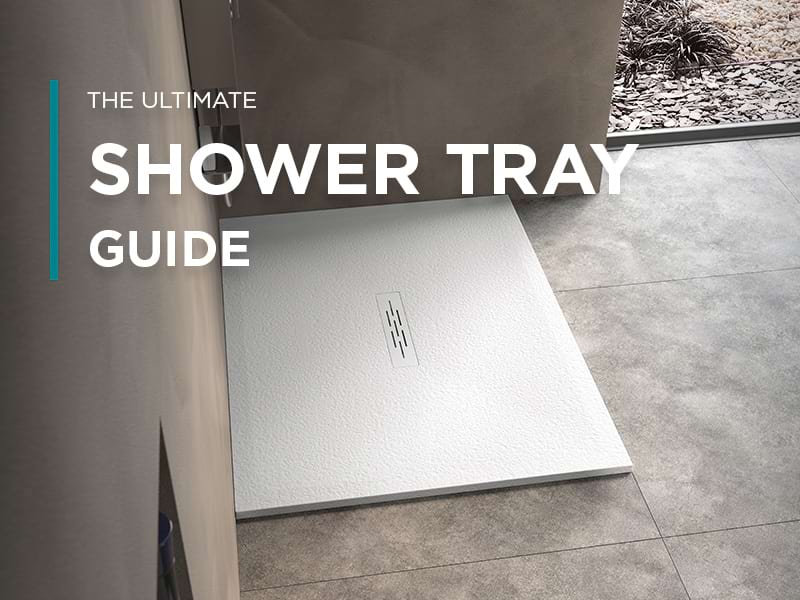
Choosing the right shower tray is one of the most important decisions in any bathroom project. Get it wrong, and you are looking at leaks, poor drainage and a costly refit. Get it right, and you have a solid, watertight foundation that performs for decades. This guide covers everything you need, from shower tray types and materials to sizing and installation.
What Is a Shower Tray and Why Does It Matter?
A shower tray forms the base of your shower area. Its job is to collect water and channel it safely to the waste outlet, protecting your floor and subfloor from moisture damage. Beyond the functional basics, the type you choose will also affect how your bathroom looks, particularly how flush or prominent the unit sits against your walls and floor.
A poorly fitted or low-quality tray can flex underfoot, compromise seals and lead to serious water ingress. The right choice, correctly installed, eliminates these risks entirely.
Types of Shower Trays Explained
Raised trays usually sit 90 to 150 mm above the subfloor. They are easier to plumb because there is more room for the waste pipe to fall, making them the practical choice for most bathroom conversions, especially on upper floors.
Low profile shower trays reduce that height considerably. Kinedo's Kineline and Kinemoon Style trays sit at just 26 mm thick, giving a much sleeker, more contemporary look. The reduced height does mean you need to be precise about waste pipe fall during installation, but the visual result is well worth it.
Walk-in shower trays are designed for open, frameless setups. They typically feature an off-centre or linear waste point and a subtle slope to direct water towards the drain. Kinedo's shower trays are available in larger rectangular formats that suit exactly this kind of installation.
Wet room shower trays sit completely flush with the floor and are tiled over for a seamless, barrier-free finish. Kinedo trays, including the Kinemoon, can be installed at ground level or in a wetroom-style setting, giving you genuine flexibility for your project.
Kinedo Shower Tray Materials: What Is Biolex?
Unlike many shower trays on the market made from basic acrylic or ceramic, every Kinedo tray is built from Biolex, a robust mineral composite comprising 80% mineral, acrylic resin, and a gel coat surface. This gives Kinedo shower trays a unique set of advantages over traditional materials.
The textured surface provides genuine anti-slip performance. All Kinedo trays carry anti-slip ratings, with most achieving PN24 certification (equivalent to DIN 51097 C), and strong Pendulum Test Values even when wet.
The Kinediva, Kinemoon Style, Kinerock Evo, and Kineline trays are all cuttable to fit awkward spaces or non-standard dimensions, removing one of the most common headaches in bathroom installation. Read our blog for more information on how to cut a shower tray.
All Kinedo trays come with a warranty of up to 10 years, reflecting the confidence behind the material and manufacturing quality.
How to Choose the Right Shape and Size Shower Tray
Always measure your space before looking at products. tray sizes range from 700x700 mm, a practical minimum for most adults, up to larger rectangular formats for walk-in designs.
Square shower trays work well in alcoves where width and depth are roughly equal. Rectangular trays suit longer shower zones and tend to offer a more generous showering experience. The Kinemoon shower tray range is available in both square and rectangular.
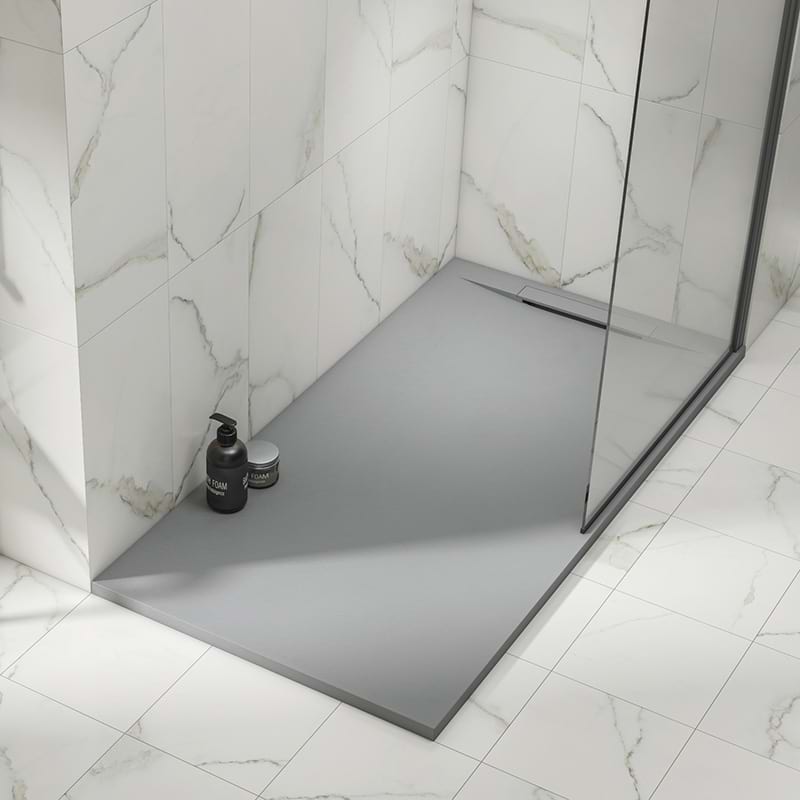
As a general baseline, a 900x900 mm shower tray is comfortable for most people. Stepping up to 1200x800 mm or larger transforms the feel of the shower considerably. If your bathroom allows it, it is worth doing. Colour is also worth considering early. Kinedo trays are available in up to six colours depending on the range, from clean white and calming sable through to contemporary anthracite. Choosing your tray colour before specifying wall panels or enclosures makes it much easier to build a coherent scheme.
Installation: Fitting Your Shower Trays Correctly
Five things matter most when fitting a shower tray:
- Level the floor first. Any unevenness causes flex, which cracks seals and leads to leaks over time.
- Get the waste fall right. Low profile trays usually need at least 18 mm of fall to the waste to drain efficiently. Refer to the instructions manual of your particular tray.
- Support the base fully. Use a mortar bed or adjustable feet and never leave the centre of the tray unsupported. Areas which should specifically be supported are also detailed in the instructions manual.
- Silicone the perimeter, not grout. The joint between the tray and wall panels needs to flex slightly. Silicone accommodates movement; grout does not.
- Test before finishing the walls. Run water through and check for leaks before tiling or fitting enclosure panels.
The most common mistake is rushing. Allow your mortar or adhesive to fully cure before loading the shower tray with water or bodyweight. It is worth the wait. Skipping this step is how many installation failures happen.
Need More Information?
Browse Kinedo's full range of shower trays, from ultra-low profile options for contemporary bathrooms to walk-in designs engineered for open shower spaces.
Share this content